


AREAS AND SIGHTS

Mt. Hakusan (Hiking, Nature, National Park)
Hakusan

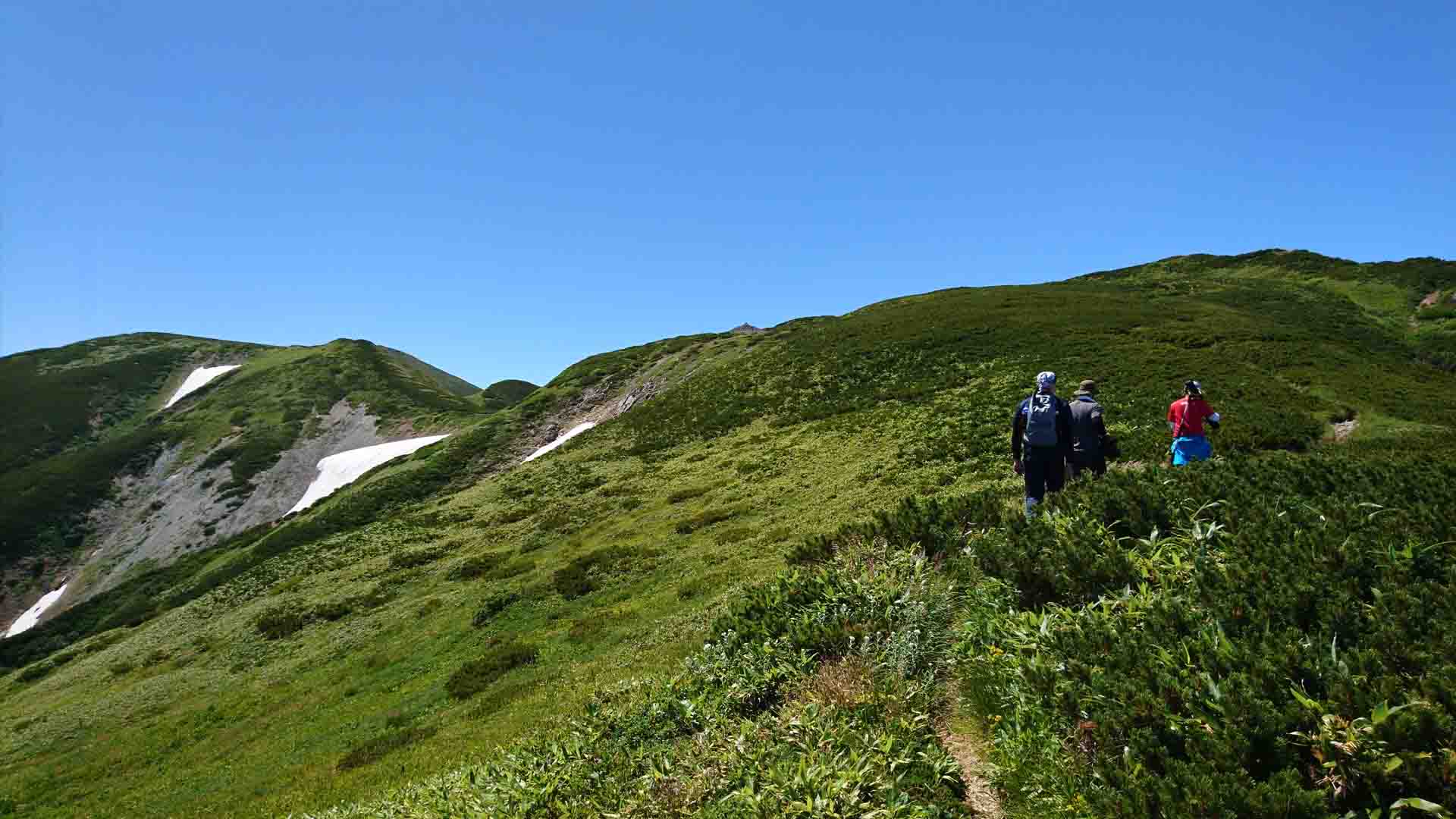
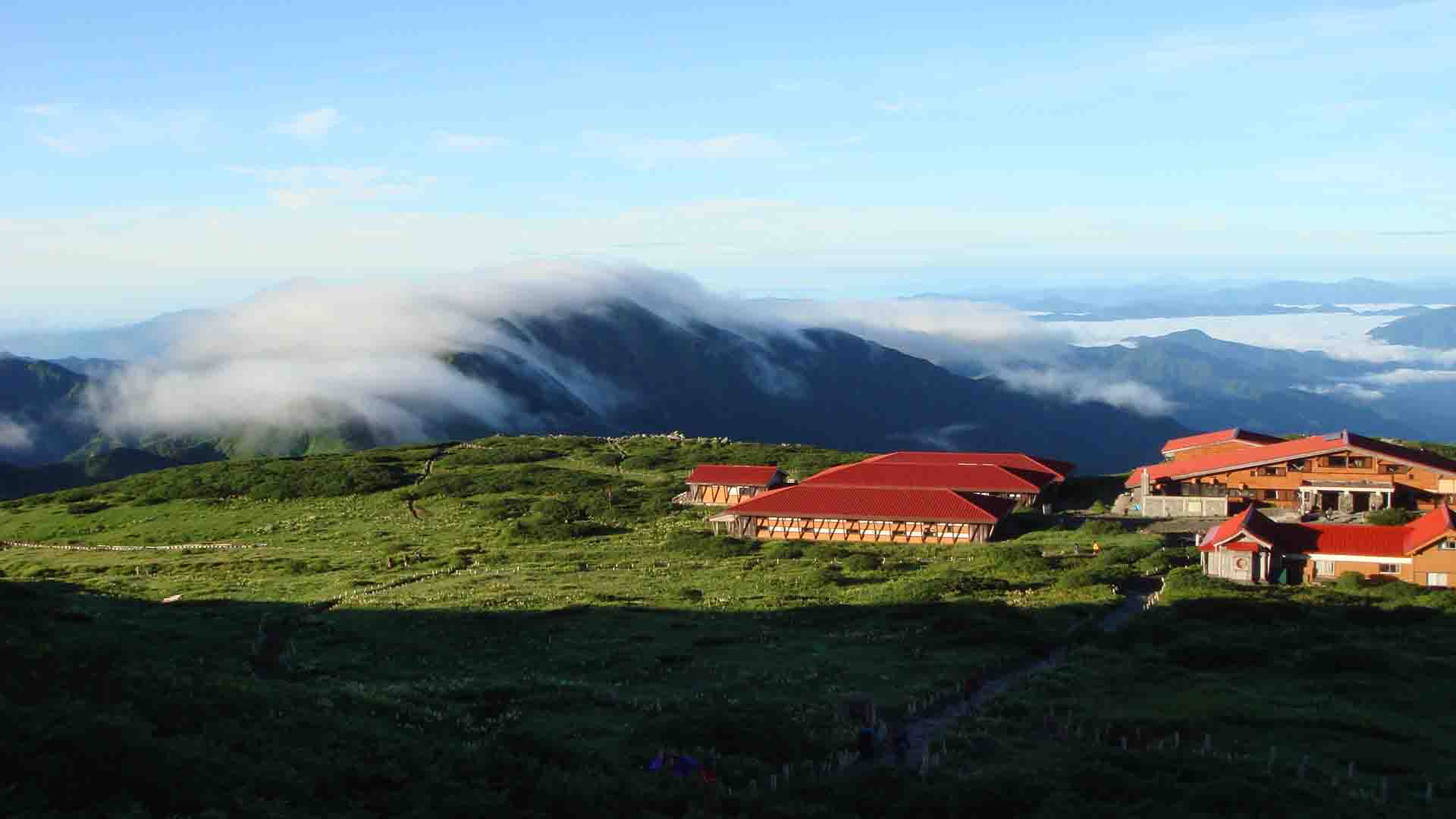
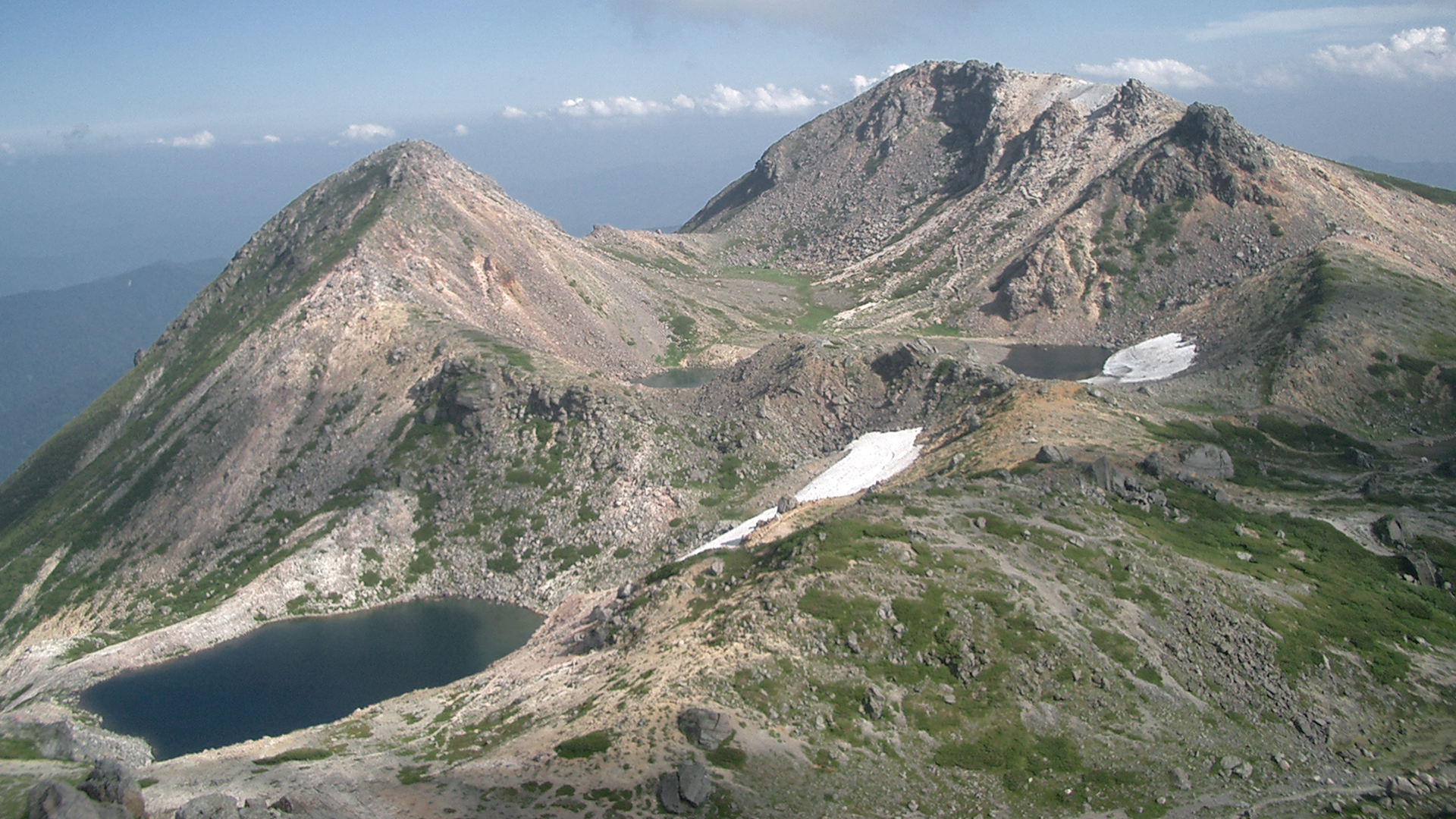
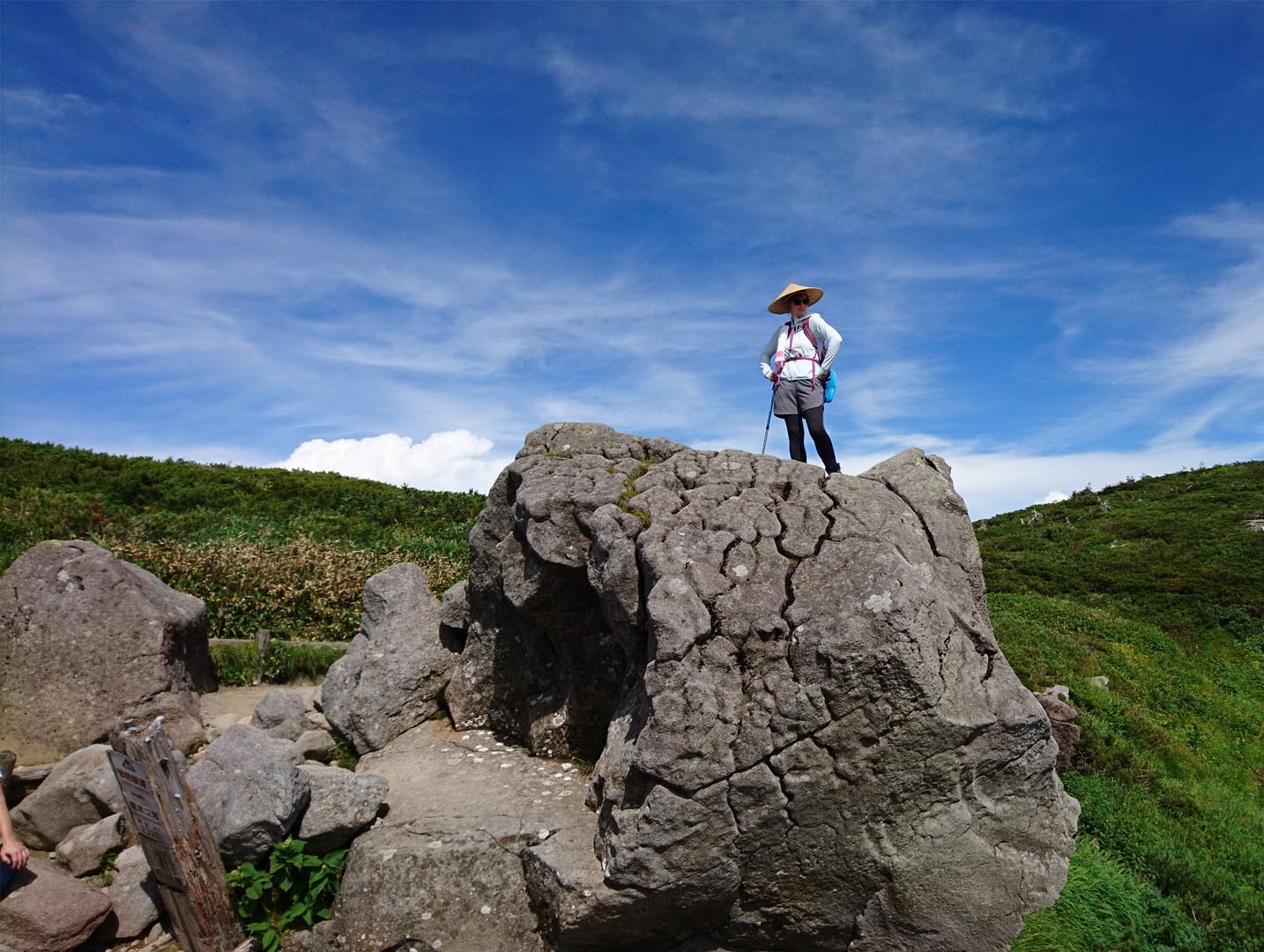
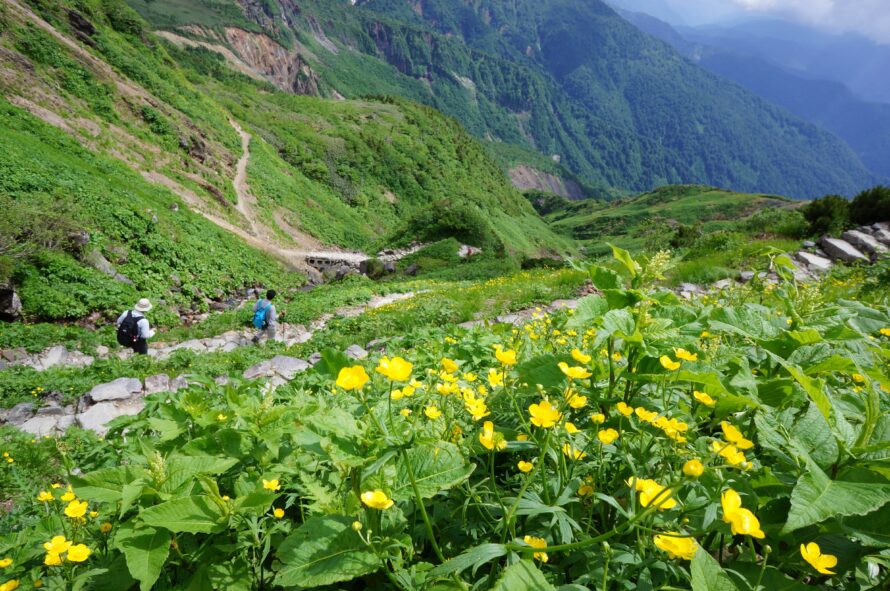
Mt. Hakusan has a long religious history, being the pilgrimage destination for monks since the early 700s. Nowadays it is a popular hiking destination for people of all ages, from school children and families, to elderly hikers. There are many hiking courses to the summit, starting from within Ishikawa, Fukui and Gifu Prefectures. The most popular course is a two-day trip, starting on the Sabo-shindo Trail, and returning along the Eco-Line route. There are also various smaller walking trails scattered across the mountain, which give access to various alpine flowers and trees. For more experienced hikers, several long trails are also available.
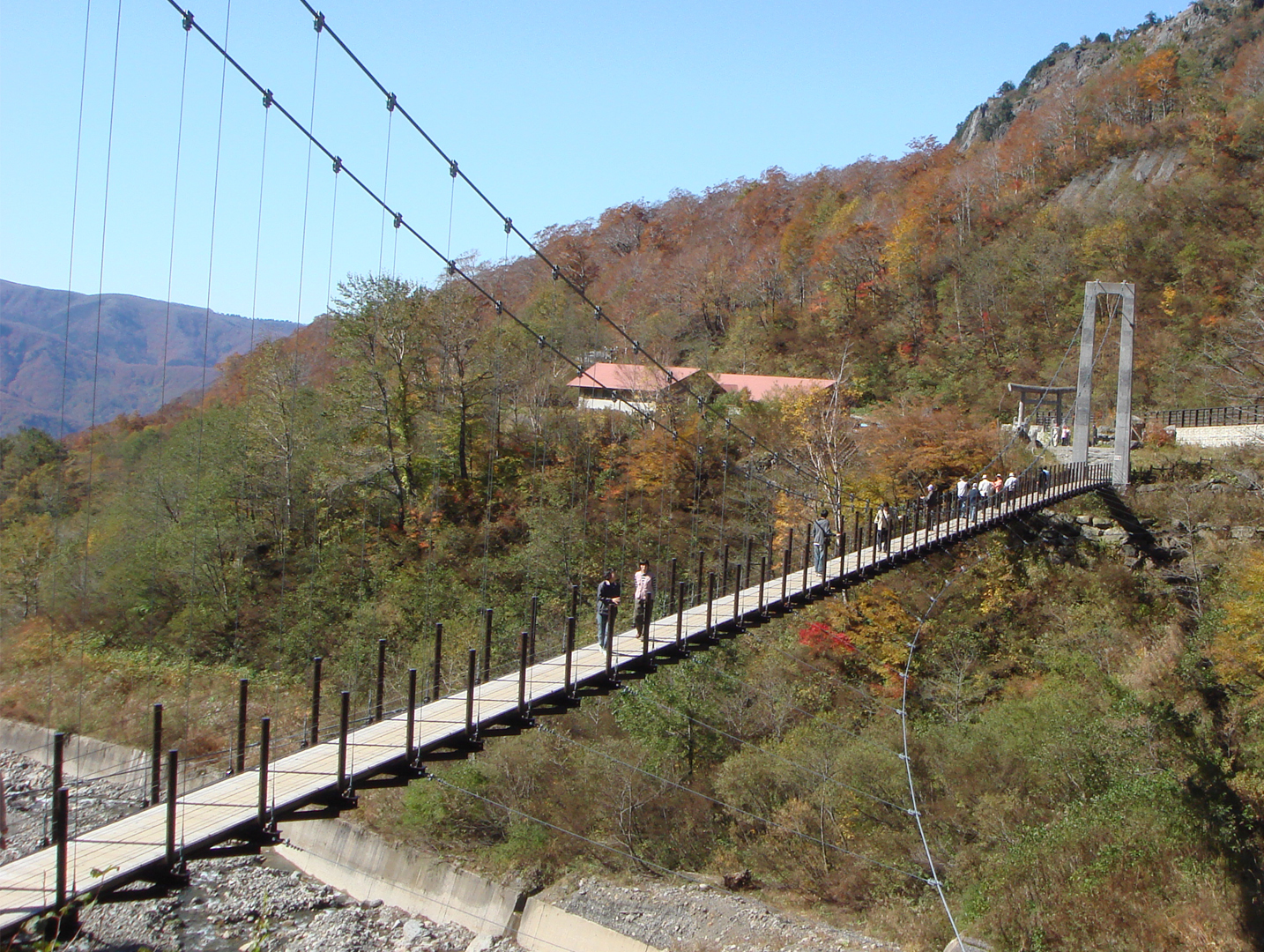
Depending on weather conditions, the most popular route (Sabo-shindo Trail) to the mountain can be accessed from the Betto Suspension Bridge from approximately April / May through to October / November via the Betto Deai Center. Hikers can stay at several mountain lodges and camping grounds scattered near the summit. Late July is the best time to see alpine flowers in bloom. September is the best time to see autumn foliage. Mid-August is the most popular time to climb due to summer holidays. Lodges often become fully booked during this time, so book in advance!
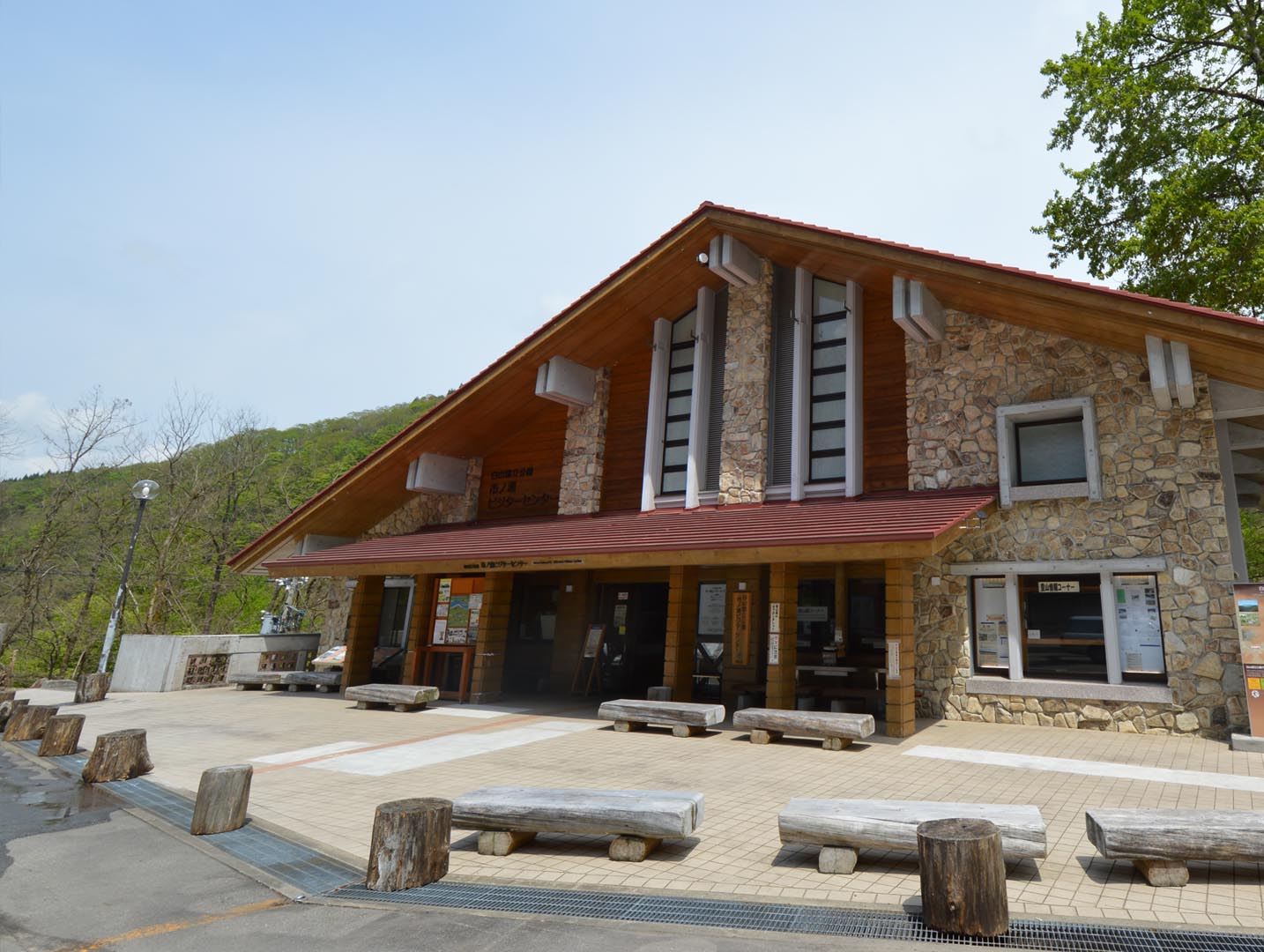
Mt Hakusan is a potentially active volcano. For your safety, if choosing to climb Mt Hakusan, you must submit a Tozantodoke “Intention to Climb” form before you climb, and submit it at the start of the trail (a submission box is available at the Bettou Deai Center and Ichinose Visitor Center). You may be fined if you do not. If you need help, you can ask the staff at the Ichinose Visitor Center reception desk.
Depending on weather conditions, the most popular route (Sabo-shindo Trail) to the mountain can be accessed from the Betto Suspension Bridge from approximately April / May through to October / November via the Betto Deai Center. Hikers can stay at several mountain lodges and camping grounds scattered near the summit. Late July is the best time to see alpine flowers in bloom. September is the best time to see autumn foliage. Mid-August is the most popular time to climb due to summer holidays. Lodges often become fully booked during this time, so book in advance!
Mt Hakusan is a potentially active volcano. For your safety, if choosing to climb Mt Hakusan, you must submit a Tozantodoke “Intention to Climb” form before you climb, and submit it at the start of the trail (a submission box is available at the Bettou Deai Center and Ichinose Visitor Center). You may be fined if you do not. If you need help, you can ask the staff at the Ichinose Visitor Center reception desk.
Access
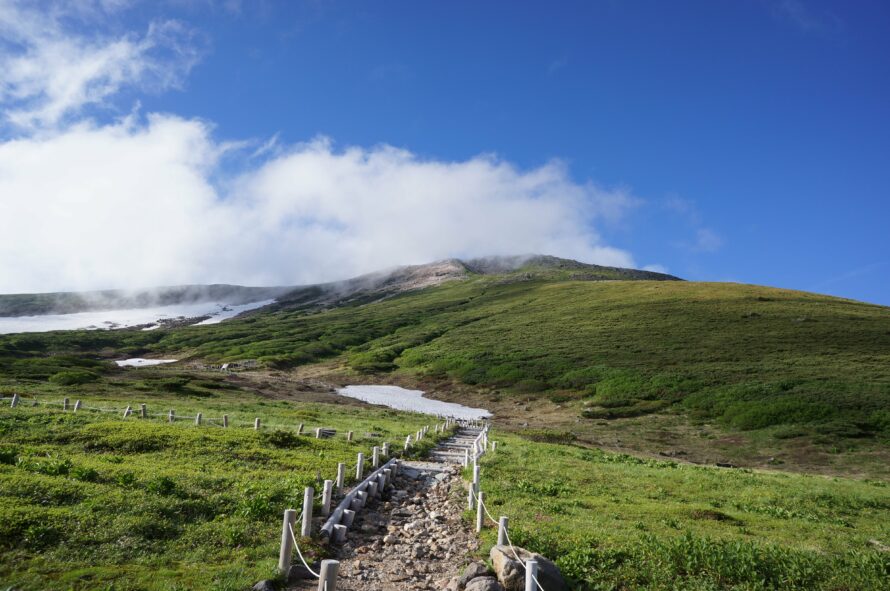
Ishikawa's most popular climbing routes - the Sabo-shindo (easy/intermediate) and Kanko-shindo (intermediate) trails - are accessible via the Betto Deai Center. There are also various (and much longer) trails available from the Ichinose Visitor Center, and also from Chugu Onsen - however these are for experienced hikers and can take several days. The following information concerns access to/from the Betto Deai Center.
Ishikawa's most popular climbing routes - the Sabo-shindo (easy/intermediate) and Kanko-shindo (intermediate) trails - are accessible via the Betto Deai Center. There are also various (and much longer) trails available from the Ichinose Visitor Center, and also from Chugu Onsen - however these are for experienced hikers and can take several days. The following information concerns access to/from the Betto Deai Center.
Access by Car
Peak climbing season is mid July to mid October. During this time access to the Betto Deai Center is closed to private vehicles on weekends and public holidays. Climbers must park at the Ichinose Visitor Center, and catch a shuttle bus to the Betto Deai Center. Parking is free however there is a fee for the bus.
Outside of peak season, climbers can park at at the Betto Deai Center. However, access is completely closed during winter and heavy rain.
Peak climbing season is mid July to mid October. During this time access to the Betto Deai Center is closed to private vehicles on weekends and public holidays. Climbers must park at the Ichinose Visitor Center, and catch a shuttle bus to the Betto Deai Center. Parking is free however there is a fee for the bus.
Outside of peak season, climbers can park at at the Betto Deai Center. However, access is completely closed during winter and heavy rain.
Access by Bus
Shuttle buses are run between Ichinose and Betto-deai. During peak climbing season, buses also usually run from Kanazawa Station and Matto Station, however schedules change each year. Please check with the operating companies for more information.
Shuttle buses are run between Ichinose and Betto-deai. During peak climbing season, buses also usually run from Kanazawa Station and Matto Station, however schedules change each year. Please check with the operating companies for more information.
Accommodation
The following accomodation facilities are available on Mt. Hakusan. Reservations must be made in advance.
• Hakusan Murodo Lodge.
This is one of the closest accommodations to the summit. It is a communal sleeping quarters shared with other hikers. Reservations must be made by phone (an English translation service is available from May to October). Snacks, drinks, and beer are available for purchase (cash only). Accommodation fee must be paid in cash upon check-in. More information here (Automatic English translation available).
• Hakusan Raicho-so Hut.
This is one of the closest accommodations to the summit. It has private rooms for small groups. Reservations must be made by phone (an English translation service is available from May to October). Snacks, drinks, and beer are available for purchase (cash only). An advanced security payment of 10,000 yen must be paid via bank transfer at least one week before the reservation. More information here (Automatic English translation available).
• Nanryu Sansou Lodge / Nanryu ga Bamba Cabins and Campsite
Located between the summit of Mt. Hakusan and Mt. Bessan. The Lodge has communal sleeping quarters, private cabins, and camping grounds. Snacks, drinks, and beer are available for purchase (cash only). Accommodation fee must be paid in cash upon check-in. Reservations must be made by phone (Japanese only). More information here (Japanese).
You can also consider staying in one of the hotels or inns in Shiramine, near the trail head area, before and/or after climbing. The Shiramine Onsen Soyu is popular with hikers wanting to relax after their climb.
The following accomodation facilities are available on Mt. Hakusan. Reservations must be made in advance.
• Hakusan Murodo Lodge.
This is one of the closest accommodations to the summit. It is a communal sleeping quarters shared with other hikers. Reservations must be made by phone (an English translation service is available from May to October). Snacks, drinks, and beer are available for purchase (cash only). Accommodation fee must be paid in cash upon check-in. More information here (Automatic English translation available).
• Hakusan Raicho-so Hut.
This is one of the closest accommodations to the summit. It has private rooms for small groups. Reservations must be made by phone (an English translation service is available from May to October). Snacks, drinks, and beer are available for purchase (cash only). An advanced security payment of 10,000 yen must be paid via bank transfer at least one week before the reservation. More information here (Automatic English translation available).
• Nanryu Sansou Lodge / Nanryu ga Bamba Cabins and Campsite
Located between the summit of Mt. Hakusan and Mt. Bessan. The Lodge has communal sleeping quarters, private cabins, and camping grounds. Snacks, drinks, and beer are available for purchase (cash only). Accommodation fee must be paid in cash upon check-in. Reservations must be made by phone (Japanese only). More information here (Japanese).
You can also consider staying in one of the hotels or inns in Shiramine, near the trail head area, before and/or after climbing. The Shiramine Onsen Soyu is popular with hikers wanting to relax after their climb.
INFORMATION
Free Map for Travelling Around GeoparksPocket Geo is a free map service that can be accessed online. It includes information about nearby sites and tourist destinations in the geopark. If you click on the sites, you can see pictures and information about them.
Click here to visit Pocket Geo